Zebu cattle, also known as humped cattle or indicine cattle, are a type of domesticated bovine native to South Asia that are adapted to hot, arid climates. They are characterised by a prominent hump on their shoulders, long ears, and a large dewlap, and are known for their ability to tolerate heat and resist diseases prevalent in tropical regions. Zebu cattle were introduced to other parts of the world, including Africa and South America, where they were crossed with local cattle breeds to create new strains that were more heat tolerant and disease resistant. Today, Zebu cattle make up a significant portion of the world’s cattle population and are used for a variety of purposes, including meat, milk, and draught power. They are also valued for their cultural and historical significance.
Category Archives: General
Genomic clues of the evolutionary history of Bos indicus cattle – Utsunomiya – 2019 – Animal Genetics – Wiley Online Library
Domestication of cattle: Two or three events?
Bovine Ephemeral Fever
Subtropical areas of Australia experiencing substantial outbreaks of Bovine Ephemeral Fever (BEF) in 2022. BFE is also known as Three-day Sickness although the symptoms can persevere for much longer. Up to 28 days in documented cases.
Alegra Kevin
Alegra Kevin settling in at his new home
Characteristics of the Dairy Gir Leiteiro Cow
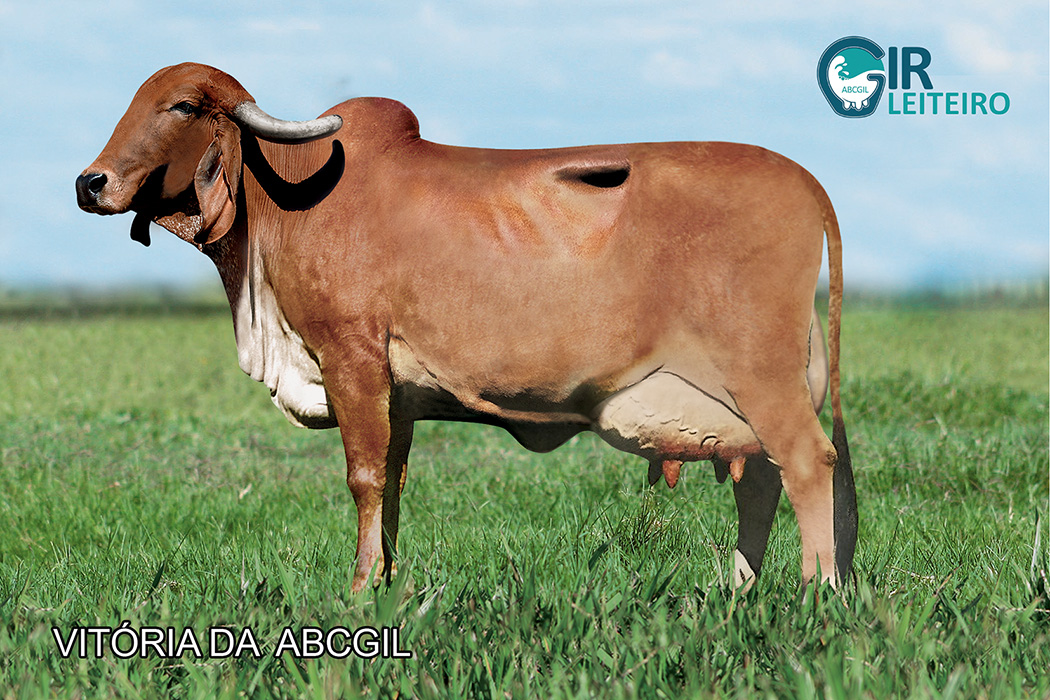
The head must have an ultra-convex profile, be medium, thin and dry, with a broad forehead and a skewer thrown back, without nimbure; straight, narrow and delicate bevel; muzzle black and broad, moist, with flared nostrils; thick, firm lips, large mouth and elliptical-shaped eyes, bright and darkly pigmented, protected by upper eyelid wrinkles and black eyelashes. Ears of medium length should be pendant, starting in the form of a tube wrapped around itself, then opening outwards, curving inwards at the tip and facing the face (“hawk”). The horns should be dark, symmetrical, thick at the base, protruding downwards and backwards, elliptical in section leading upwards and curving inwards, ideally.
THE HISTORY AND EVOLUTION OF BRAHMANS AND ZEBUS
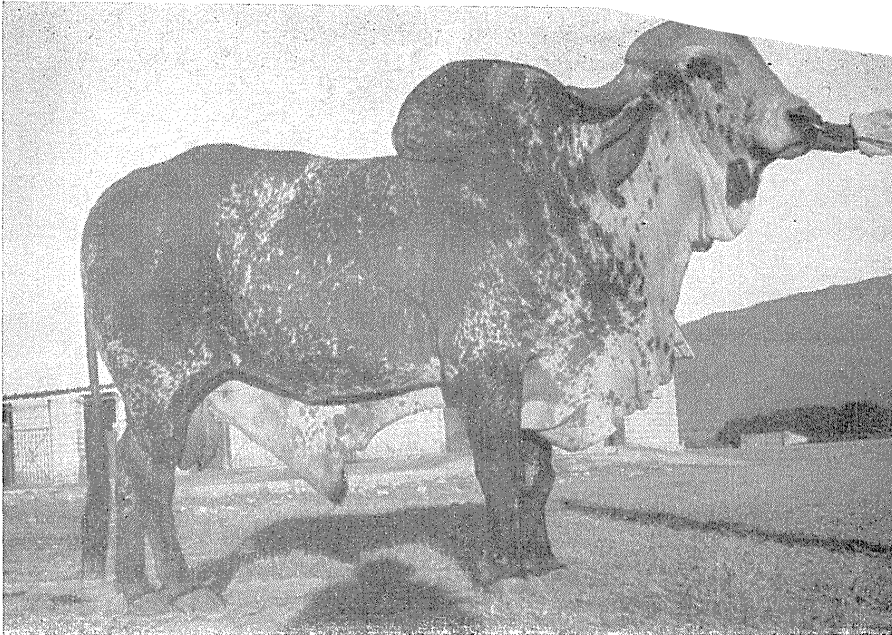
Presentation by Dr George Jacobs to the NSW Branch of ABBA’s Field Day at Grafton Saleyards – 5 March 2000
Physical Characteristics of Gyr (Gir) Cattle
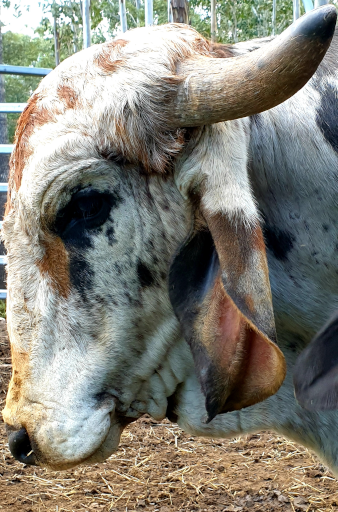
The most noticeable characteristic of the Gir is a very prominent and broad forehead, which forms a heavy, bony shield covering part of the head.
Origin of Gyr Cattle
India is believed to be the centre of origin of Zebu cattle, Bos indicus, which later spread to Africa and southeast Asia. Domestication took place in the Indus Valley from Bos primigenius nomadicus
 Gyr Cattle