The Brazilian Dairy Gir Breeding Programme aims to improve the Gir breed for milk production in tropical regions. Established in 1985, it is the first breeding programme of its kind in the world and has made use of various technical innovations, including genomic predictions. The Gir breed is native to India and is better adapted to tropical conditions than European breeds. The breeding programme has had notable success in improving the productivity and reproductive performance of the Gir breed, with average milk yield increasing by 25% over the past two decades. It has also developed a genetic improvement programme for beef production using Gir, and there are now more than seven million Gir cows in Brazil.
Author Archives: Nymboida Gyr
Genetic diversity in Gyr, Nellore, Guzerat, and Holstein Cattle
A study by Machado et al. analysed the genetic diversity of four cattle breeds using microsatellite markers. The results showed that the Holstein breed was the most distinct from the other breeds. A total of 64 alleles were detected across all four breeds, with each breed showing 53% of the total number of alleles. The average number of alleles per locus was 7.11 ± 3.21. The study provides valuable insight into the genetic diversity of different cattle breeds and has implications for breeding decisions and the preservation of genetic resources.
Zebu cattle have had a significant influence on modern cattle breeds
Zebu cattle, also known as humped cattle or indicine cattle, are a type of domesticated bovine native to South Asia that are adapted to hot, arid climates. They are characterised by a prominent hump on their shoulders, long ears, and a large dewlap, and are known for their ability to tolerate heat and resist diseases prevalent in tropical regions. Zebu cattle were introduced to other parts of the world, including Africa and South America, where they were crossed with local cattle breeds to create new strains that were more heat tolerant and disease resistant. Today, Zebu cattle make up a significant portion of the world’s cattle population and are used for a variety of purposes, including meat, milk, and draught power. They are also valued for their cultural and historical significance.
Genomic clues of the evolutionary history of Bos indicus cattle – Utsunomiya – 2019 – Animal Genetics – Wiley Online Library
Domestication of cattle: Two or three events?
Cattle : GIR | RARE BREEDS TRUST OF AUSTRALIA | TidyHQ
Bovine Ephemeral Fever
Subtropical areas of Australia experiencing substantial outbreaks of Bovine Ephemeral Fever (BEF) in 2022. BFE is also known as Three-day Sickness although the symptoms can persevere for much longer. Up to 28 days in documented cases.
Historic Infomation
Excerpts from ‘Zebu Cattle of India and Pakistan FOOD AND AGRICULTURE ORGANISATION Of THE UNITED NATIONS’, Rome 1953
Alegra Kevin
Alegra Kevin settling in at his new home
Characteristics of the Dairy Gir Leiteiro Cow
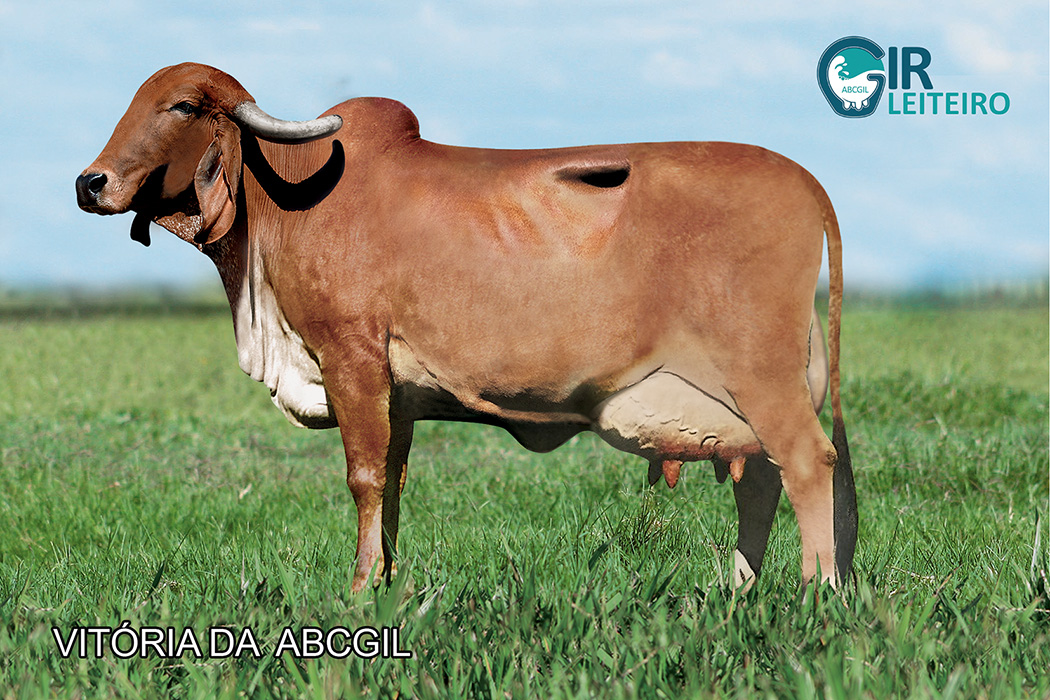
The head must have an ultra-convex profile, be medium, thin and dry, with a broad forehead and a skewer thrown back, without nimbure; straight, narrow and delicate bevel; muzzle black and broad, moist, with flared nostrils; thick, firm lips, large mouth and elliptical-shaped eyes, bright and darkly pigmented, protected by upper eyelid wrinkles and black eyelashes. Ears of medium length should be pendant, starting in the form of a tube wrapped around itself, then opening outwards, curving inwards at the tip and facing the face (“hawk”). The horns should be dark, symmetrical, thick at the base, protruding downwards and backwards, elliptical in section leading upwards and curving inwards, ideally.
 Gyr Cattle